
The Day Freedom
Finally Arrived.
On January 1, 1863, President Lincoln signed the Emancipation Proclamation. It declared enslaved people in Confederate states free. But without soldiers to enforce it, it was words on paper. Two and a half years later, those soldiers finally arrived. Pennsylvania recognized that day as a state holiday in 2019. This is the Commonwealth's resource for that history.
What Is Juneteenth?
Juneteenth is the oldest nationally celebrated commemoration of the enforcement of emancipation in the United States. The word is a blend of "June" and "nineteenth." The date is June 19, 1865.
On the morning of June 19, 1865, a Union general stood before them and read a piece of paper aloud. And all of that ended. Not gradually. Not by permission. By force. By soldiers. By decree.
The chills. The tears. The disbelief. The realization that rushed through their bodies in that moment is what Juneteenth commemorates. Not a document. The moment it was enforced.
General Order No. 3 - Galveston, Texas, June 19, 1865
"The people of Texas are informed that in accordance with a Proclamation from the Executive of the United States, all slaves are free. This involves an absolute equality of personal rights and rights of property between former masters and slaves, and the connection heretofore existing between them becomes that between employer and hired labor."Major General Gordon Granger, U.S. Army


Why Texas?
The Emancipation Proclamation was signed January 1, 1863. But it could only be enforced where Union soldiers stood. Texas was beyond their reach. As Union forces advanced through the South, enslavers deliberately moved enslaved people westward into Texas to keep them from freedom.
The people freed on June 19 came from across the entire country, not just Texas. They were held in the last Confederate enclave. When Granger read General Order No. 3, the Confederacy's final stronghold fell. Six months later the 13th Amendment finished what June 19 started.
Juneteenth is an American holiday. It is the moment the last people enslaved by the Confederacy gained their freedom.
Three Dates That Changed America
April 9, 1865
Lee surrenders at Appomattox.
The Civil War ends. But freedom is not yet universal. Texas, the most remote Confederate stronghold, has no Union presence. Approximately 250,000 people remain enslaved there.
June 19, 1865
Granger arrives in Galveston.
The last Confederate slaves are freed. The Confederacy's final stronghold falls. This day becomes Juneteenth.
December 6, 1865
The 13th Amendment is ratified.
Slavery abolished throughout the entire United States. June 19 made this possible.
Common Questions
Honest, historically grounded answers to the questions people most often ask about Juneteenth.
No. Juneteenth is not only a Texas holiday. It is the moment the last Confederate stronghold fell. As Union forces advanced through the South, enslavers deliberately moved enslaved people westward into Texas to keep them beyond Union reach. The people freed on June 19, 1865 came from across the entire country, held in the final Confederate enclave. Their freedom was not a regional event. It was the defeat of the Confederacy's last stronghold, which cleared the path for the 13th Amendment to be ratified six months later, abolishing slavery throughout the United States. That is an American moment, not solely a Texan one.
How Juneteenth Has Always Been Celebrated
Juneteenth was not created by government. It was born from the people who survived slavery and chose to remember the day freedom finally reached the last enslaved people held by the Confederacy.
Because Black Americans were denied access to public parks, communities purchased their own land. Houston's Emancipation Park was bought in 1872 by a community led by Reverend Jack Yates, a formerly enslaved Baptist minister. Austin, Mexia, and communities across the South did the same. These were not just parks. They were acts of self-determination built from nothing.
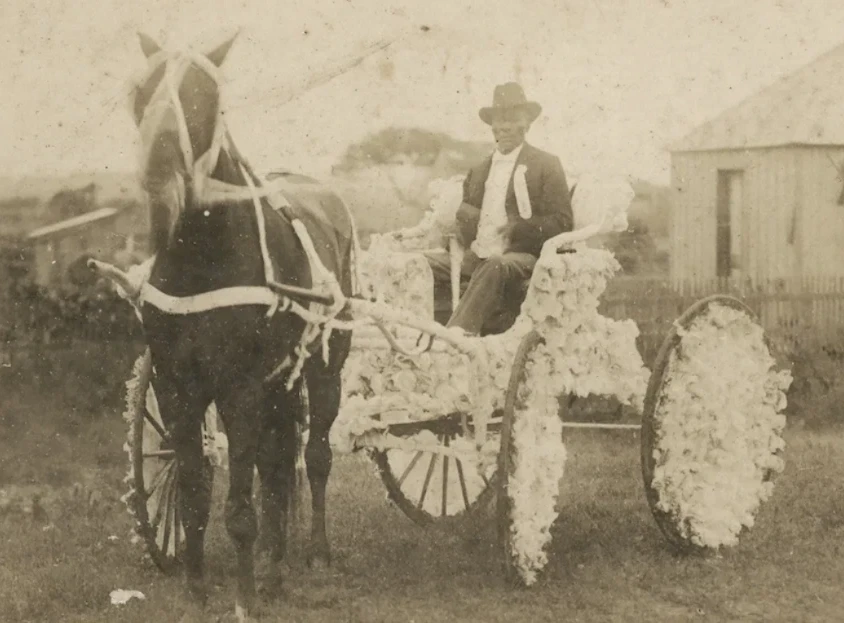
The tradition of fine dress was a statement. Enslaved people had been forced to wear whatever their enslavers provided. On Juneteenth they dressed in their finest, adorned carriages with flowers, processed through their own streets, held reenactments of the Union's arrival, prayed, cooked, and gathered their children to pass the story forward.
This tradition spread across the country carried by the formerly enslaved as they built new lives. For more than 150 years it was preserved not by law but by people. Millions of families. Millions of churches. A tradition born from joy, faith, and an unbreakable love of freedom.
The laws that made slavery possible and delayed emancipation are documented in full on the Legal History page. Read the Legal History
Explore Pennsylvania's Juneteenth Network
Pennsylvania Juneteenth Observance maintains a growing directory of organizations, educators, community leaders, celebrations, and historical resources throughout the Commonwealth.